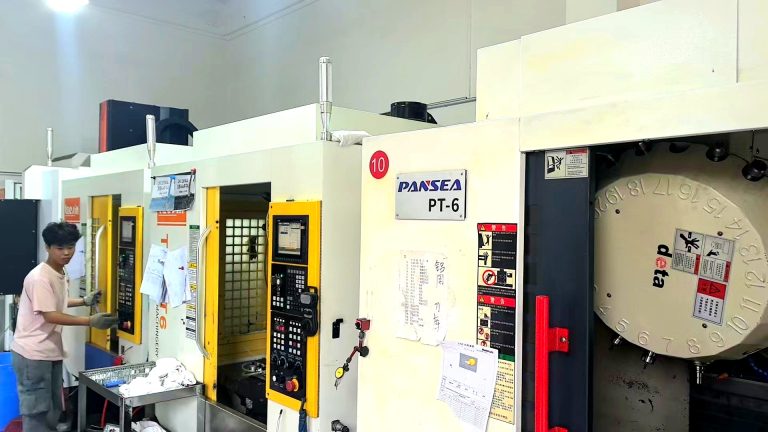
CNC Machining Tolerance Guide for Buyers: When Standard Tolerances Are Enough and When Tight Tolerances Matter
CNC Machining Tolerance Guide for Buyers: When Standard Tolerances Are Enough and When Tight Tolerances Matter
Tolerance is one of the biggest factors that affects CNC machining cost, inspection workload, quote speed, and production risk. Many buyers know tolerances matter, but are not always sure what to specify, when tighter control is really necessary, and how tolerance decisions affect the final quotation.
This guide explains CNC machining tolerances from a buyer’s point of view, with a focus on practical decision-making rather than engineering theory alone.
What tolerance means in CNC machining
Tolerance is the allowed variation from a target dimension.
For example, if a drawing dimension is 20.00 mm and the tolerance is ±0.05 mm, the acceptable size range is 19.95 mm to 20.05 mm.
In CNC machining, tighter tolerance usually means:
- more careful process control
- slower machining in some cases
- more inspection time
- higher rejection risk
- higher cost
That is why tolerance should be specified according to actual function, not by habit.
Why tolerance matters to buyers
Tolerance affects much more than dimensional accuracy on paper. It influences:
- part fit in assembly
- repeatability across batches
- quote speed
- supplier process planning
- inspection method
- lead time
- total manufacturing cost
If every feature is treated as critical, the project usually becomes slower and more expensive without adding real value.
Standard tolerance vs tight tolerance
Standard tolerance
Standard tolerance is suitable for most non-critical dimensions on many machined parts.
Typical examples include:
- general outer dimensions
- non-mating surfaces
- cosmetic features
- support geometry that does not control assembly fit
These dimensions still need to be accurate, but they do not require unusually strict control.
Tight tolerance
Tight tolerance should be reserved for features where performance really depends on it.
Typical examples include:
- shaft and bore fits
- bearing seats
- sealing surfaces
- alignment-related features
- precision locating holes
- interfaces with mating parts
The smaller the allowed variation, the more attention the supplier must give to process stability and inspection.
What buyers should ask before specifying a tight tolerance
Before placing a tight tolerance on a feature, it helps to ask:
- Does this dimension directly affect function?
- Is it a fit-critical feature?
- Does it affect sealing, alignment, or assembly repeatability?
- Is this requirement based on real engineering need or copied from an old drawing?
- Can a looser tolerance still achieve the same result?
These questions can reduce unnecessary manufacturing cost very quickly.
Common tolerance mistakes in RFQs
1. Applying tight tolerance to nearly everything
This is one of the most common issues in buyer drawings.
When almost every feature has a narrow tolerance band, suppliers must assume the entire part needs precision-level control. That slows down quotation, machining, and inspection.
Better approach
- clearly identify truly critical dimensions
- keep non-critical dimensions at practical standard tolerance
- separate fit-critical features from general geometry
2. Not identifying which features matter most
Even if a part includes some tight tolerances, suppliers work better when they know which features are most important.
Better approach
Use notes or drawing communication to identify:
- critical-to-fit features
- critical sealing surfaces
- datum-related functional dimensions
- cosmetic-only areas vs functional areas
3. Tight tolerance without considering material behavior
Different materials behave differently during machining.
For example:
- aluminum may move differently from steel
- plastic parts may be more sensitive to heat and deformation
- thin-wall geometry may increase dimensional instability
A tolerance that seems simple on paper may become more difficult depending on material and geometry.
4. Ignoring finishing impact
Surface finishing can influence final dimensions.
This matters for:
- anodized holes or threads
- plated mating surfaces
- polished areas with roughness requirements
- passivated stainless parts where appearance and expectation may not match
If finishing is part of the job, tolerance should be reviewed together with finish requirements.
How tight tolerances affect cost
Tighter tolerances often increase cost through multiple paths:
- slower feeds or more careful machining passes
- additional setup attention
- higher scrap risk
- more inspection points
- more measurement time
- possible use of special tooling or process controls
Sometimes the raw machining time changes only slightly, but inspection and yield risk create most of the added cost.
How tight tolerances affect lead time
Tolerance can also affect lead time in several ways:
- quote review may take longer
- process planning becomes more detailed
- first article inspection may become necessary
- rework risk may increase
- supplier may need to reserve more stable machine time
For urgent parts, tolerance simplification can sometimes reduce both cost and delivery time.
Tolerance and DFM go together
Tolerance decisions should not be separated from manufacturability review.
A feature becomes harder to hold when combined with:
- deep pockets
- thin walls
- long unsupported geometry
- difficult workholding
- hard-to-reach tool access
- unstable materials or thin plastic sections
A practical supplier should review tolerance together with DFM, not as an isolated number on a drawing.
What buyers should send when tolerance matters
If tolerance is important, a stronger RFQ package helps the supplier quote faster and more accurately.
Send:
- 2D drawing with clear dimensions
- 3D model if available
- material requirement
- quantity
- finish requirement
- critical-to-function dimensions marked clearly
- fit or assembly notes if relevant
- whether the job is prototype or production
This gives the supplier enough information to judge whether the requested tolerance is practical and where the main risk lies.
When standard tolerance is usually enough
Standard tolerance is often enough for:
- covers and housings without precision fit interfaces
- many brackets and support parts
- non-critical external geometry
- early-stage prototype parts focused on shape validation
- cosmetic or clearance-only features
In these cases, pushing for very tight tolerance may only make the quote worse without improving the real result.
When tight tolerance is worth it
Tight tolerance is worth the added cost when it directly supports:
- functional fit
- bearing or shaft performance
- sealing behavior
- repeatable alignment
- controlled mating with other precision components
- downstream assembly yield
If the tighter number protects a real function, it is usually justified.
A practical way to discuss tolerance with your CNC supplier
A useful discussion is not simply “Can you hold this tolerance?”
A better discussion is:
- Which dimensions are truly critical?
- Which dimensions can be relaxed?
- What cost difference comes from the tighter requirement?
- Does finishing change the dimensional strategy?
- Is the requirement the same for prototype and production?
This usually leads to a more realistic quotation and fewer problems later.
Final thoughts
Tolerance should be treated as a functional tool, not a default sign of quality. Over-specifying tolerance often creates cost and delay without improving the final part. Under-specifying tolerance can create fit and reliability problems.
The best CNC machining approach is to apply tight control only where function requires it and keep the rest of the part practical to manufacture. For buyers, that usually means better pricing, clearer quotations, and more stable production results.
Related Reading for Buyers
Need a quote for a tolerance-sensitive CNC part?
Send your drawing, target material, quantity, finish requirement, and mark the dimensions that truly affect fit or function. We can review manufacturability and provide a practical quotation.
Request a CNC quote · See our quality approach · View machining services
Ready to Manufacture Your Parts?
Get high-precision CNC machined parts with fast turnaround times. We offer Free DFM Analysis, 24-Hour Quotes, and ISO-Certified Quality.