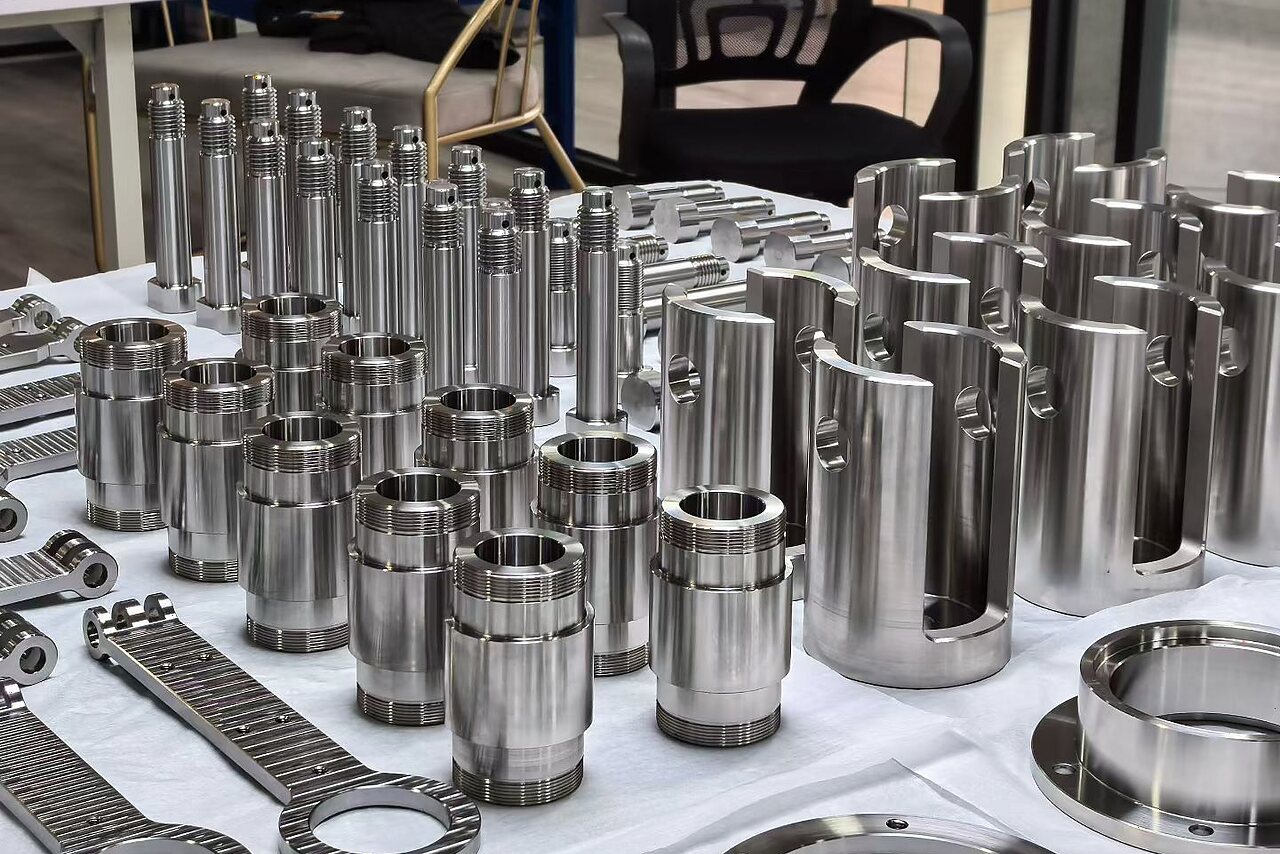
Semiconductor Equipment CNC Parts Guide
Semiconductor equipment and electronics manufacturing equipment often use CNC machined parts in fixtures, frames, vacuum-related hardware, precision plates, sensor brackets, and handling components. The buyer challenge is usually supplier discipline: clean machining, stable dimensions, controlled surface treatment, burr control, and documentation that matches the application risk.
Best-fit RFQ scenarios
- Precision plates, vacuum fixtures, alignment brackets, and carrier hardware for equipment builds.
- Low-volume replacement parts where drawings exist but the original supplier is slow or expensive.
- Aluminum, stainless steel, PEEK, or engineering plastic components with inspection requirements.
- Projects needing DFM review before production because flatness, sealing faces, or thread quality are critical.
Typical CNC parts in this industry
| Part type | Common CNC process | Buyer notes |
|---|---|---|
| Precision base plates | CNC milling and surface finishing | Flatness, hole location, surface treatment, and packaging need clear requirements. |
| Vacuum or sealing hardware | CNC milling and turning | Surface roughness, burr control, and sealing face protection are key. |
| PEEK or plastic fixtures | Plastic CNC machining | Confirm temperature exposure, wear, and dimensional stability before supplier selection. |
| Sensor and inspection brackets | CNC milling | Check datum scheme, edge breaks, black anodizing, and assembly clearance. |
Material and surface finish notes
Material choice depends on equipment zone, cleanliness expectation, load, temperature, and chemical exposure. A sourcing route should check not only machinability but also finishing, washing, packing, and document expectations.
| Material or finish | Why buyers use it | Sourcing risk to check |
|---|---|---|
| 6061 or 7075 aluminum | Common for plates, frames, brackets, and light equipment structures. | Anodizing, flatness, and edge protection need early confirmation. |
| 304 or 316 stainless steel | Used where corrosion resistance, strength, or cleaning behavior matters. | Machining time and burr control can affect price and lead time. |
| PEEK | Used for higher temperature, chemical resistance, or insulating parts. | Material cost is high, so drawing review before machining is important. |
| Hard anodizing or passivation | Improves wear, corrosion resistance, or surface durability. | Masking, color, thickness, and inspection method must be defined. |
Tolerance and quality control focus
For semiconductor equipment parts, tolerance risk is often tied to flatness, perpendicularity, hole location, sealing surfaces, and burrs. Buyers should separate critical features from general dimensions. When surface cleanliness matters, ask what washing, handling, and packing steps can be coordinated, and do not assume every supplier route has the same cleanliness standard.
What to include in the RFQ
- 3D CAD file in STEP, X_T, or IGS format, plus a 2D drawing if tolerances are important.
- Material grade, finish requirement, quantity range, target lead time, and shipping destination.
- Critical dimensions, inspection report needs, assembly notes, and any cosmetic surface requirements.
- Whether the order is for prototype validation, pilot build, repair spare parts, or repeat production.
Supplier coordination checklist
- Mark sealing faces, datum faces, and no-burr areas clearly on the 2D drawing.
- Confirm whether a CMM report, material certificate, or finish certificate is needed.
- Review whether large plates may move after machining or finishing.
- Clarify edge break rules because sharp edges and heavy chamfers create different risks.
- Ask for packing notes for clean, finished, or scratch-sensitive parts.
How CNC Precision Tech supports this sourcing work
CNC Precision Tech helps buyers coordinate supplier matching, quote review, DFM discussion, inspection evidence, and export handling for semiconductor equipment related CNC parts. The sourcing value is to compare the part requirement against supplier capability before price and lead time are treated as final.
For related process pages, see CNC machining sourcing services, supplier network and quality control, quality coordination, and send a CNC RFQ.
Related Industry CNC Sourcing Guides
If this semiconductor equipment cnc parts project has mixed materials, finishing, or inspection needs, these related application guides may help prepare the next RFQ.
- Optical and Camera CNC Components – Lens mounts, camera housings, adapter rings, black anodizing, burr control, and alignment datums.
- Battery and Energy Equipment CNC Parts – Cooling plates, insulating spacers, fixtures, mixed metal and plastic RFQs, and no-burr areas.
- Automation Equipment CNC Parts – Fixture plates, gripper parts, guide blocks, shafts, mixed-material RFQs, and repeat batches.
FAQ
Are semiconductor equipment CNC parts always ultra-tight tolerance?
No. Some features need tight tolerance, flatness, or surface control, while other areas can use standard machining tolerances. Clear critical-to-function notes help reduce unnecessary cost.
Which materials are common for semiconductor equipment CNC parts?
Aluminum, stainless steel, PEEK, POM, and other engineering plastics are common, depending on cleanliness, strength, insulation, temperature, and corrosion requirements.
What documents should be requested?
Typical documents may include dimensional inspection reports, material certificates, finish certificates, photos, and packing evidence depending on the project risk.